Zone 2 Easy Running: Why Running Slow Makes You Faster
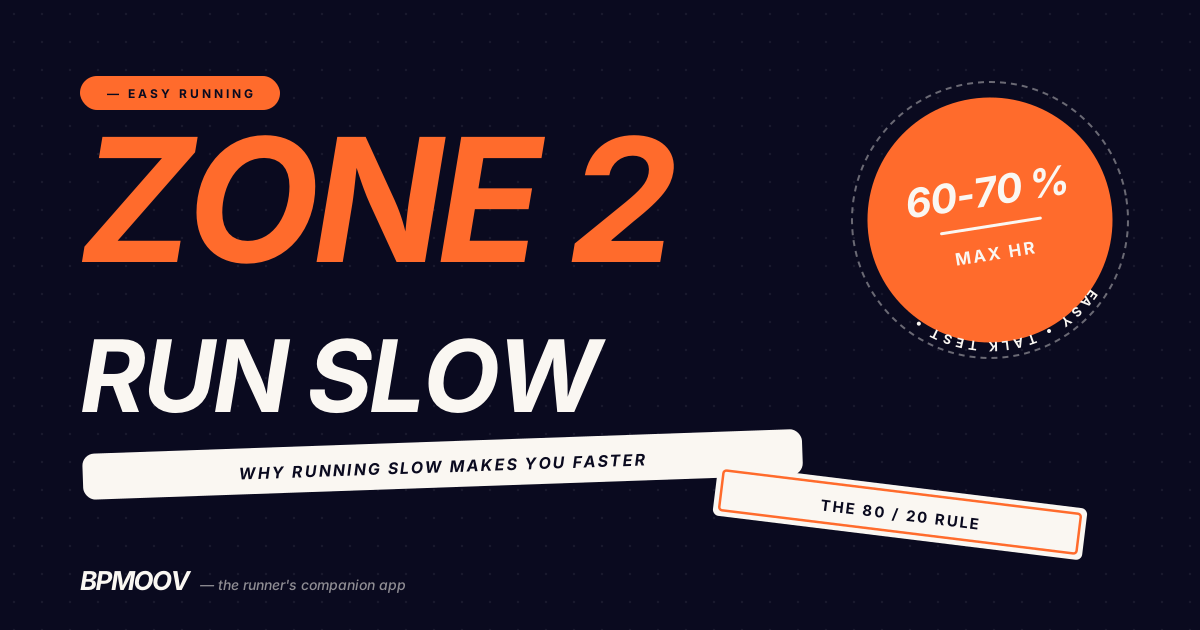
TL;DR — Zone 2, or easy running, is that comfortable pace where you can hold a conversation without gasping — roughly 60 to 70% of your max heart rate. It builds your aerobic base: more mitochondria, a more efficient heart, better fat-burning. The golden rule: spend about 80% of your volume easy and save intensity for the rest. The most common mistake? Running every easy run too fast — neither truly slow nor truly hard.
If you take just one idea from this article, make it this one: most runners get faster by slowing down. It sounds backwards. We've all absorbed the idea that to run faster, you have to train harder. But the best distance runners on the planet spend the vast majority of their time jogging at a pace that would feel almost too easy to you. Here's why — and how to do it.
What is zone 2, exactly?
"Zone 2" comes from dividing effort into intensity zones, usually five, based on your heart rate. Zone 1 is walking or a very slow recovery jog. Zone 5 is sprinting, full red. Zone 2 sits just above comfortable: an easy, sustainable effort you could hold for a long time without suffering.
It's often called easy running or your aerobic base pace: the foundation everything else is built on. It's the home of most of your runs — not the sluggish jog you do when wrecked, nor the hard run where you grit your teeth, but a comfortable, durable middle ground.
In numbers, zone 2 roughly corresponds to 60-70% of your maximum heart rate. But the number is only a guide: what matters is the feel. More on that below.
Why running slow makes you faster
Here's the heart of it. When you run in zone 2, your body adapts in a very specific and very valuable way.
First, you build your aerobic base. Your muscles produce more mitochondria — the tiny "energy factories" inside your cells. The more you have, the more efficiently you produce energy, and the longer you can run without fatiguing. This adaptation happens best at low intensity.
Second, your heart becomes more efficient: it pumps more blood per beat, your capillary density increases, and your body learns to burn fat as fuel — a nearly limitless reserve, unlike sugar. The result: over time, you run faster at the same heart rate.
Third — and this is no small thing — easy running is far less tiring. You can stack up volume without digging a fatigue hole, without wearing down your tendons, without flirting with injury. That's what makes training sustainable week after week.
How to find your zone 2 (without overthinking it)
You don't need a lab. Two simple methods, used together.
The talk test is the most reliable day to day. In zone 2, you should be able to hold a conversation in full sentences without panting. If you can only get out three words before catching your breath, you're going too fast. If you can sing effortlessly, you're probably below it.
Heart rate sharpens things up. Aim for roughly 60 to 70% of your max HR. To estimate your max HR, a real field test beats a formula, but the "220 − your age" rule gives a rough starting point. For a deeper dive on zones and paces, our VO2max, heart rate zones and running paces guide covers it all.
One trap to know: in the first few minutes, your HR takes time to rise, and late in a long run it can "drift" upward even at constant effort. Feel remains your best judge.
The 80/20 rule: the key to everything
Here's the principle that structures distance training, from beginner to elite: about 80% of your volume easy (zone 2), 20% at intensity. This is called polarized training.
It means that across five runs in a week, four should be easy and only one genuinely hard. If you run three times, two relaxed jogs and one quality session. Easy builds the engine; intensity adds speed on top. The two feed each other, but easy is the foundation — without it, intensity has nothing to stand on.
The classic mistake, which we'll get to, is running everything "in the middle."
Mistake #1: running in the "gray zone"
Most recreational runners run neither slow enough nor fast enough. They settle into a gray middle zone — too fast to truly recover and build the base, too slow to develop speed. It's the worst of both worlds: tiring enough to wear you down, not focused enough to drive progress.
Why do we fall into this trap? Because running genuinely slow, at first, bruises the ego. It feels like you're not "working." You have to accept easing off, sometimes walking the hills, letting other runners pass. That's exactly what you should do.
Other common mistakes: running every easy run at the same pace (the routine that stops producing progress), and avoiding intensity entirely out of fear of effort. Easy without any intensity also plateaus. If the topic interests you, our interval training guide explains how to place that hard 20% intelligently.
How long, how often?
Good news: zone 2 doesn't require special workouts, just slowing down your usual runs. Most of your outings should happen there, from 30 minutes to over an hour depending on your level and goal.
If you're starting out, begin with a walk-run mix while always staying within breathing comfort — our guide to starting running from scratch gives you a progressive plan. And never increase your weekly volume by more than ~10% per week: the base is built on patience, not haste.
Expect several weeks before you feel the effects. It's a slow investment, but that's precisely what makes it solid.
Once your base is laid, the hardest part is staying motivated with a goal in sight. BPMoov gathers road and trail race registrations across France and Europe — free, iOS and Android. → Download BPMoov.
FAQ
What pace should I run in zone 2?
There's no universal pace: zone 2 depends on your level. The reliable guide is feel — an easy effort where you can hold a conversation in full sentences — paired with a heart rate around 60-70% of your max. For the same runner, zone 2 pace improves with training: you run faster at the same heart rate.
How do I know I'm in zone 2?
Use the talk test: you should be able to speak in full sentences without panting. If you can only manage a few words, you're going too fast. A heart rate monitor confirms it (60-70% max HR), keeping in mind that HR takes a few minutes to stabilize and can drift upward late in a long run.
Does running slow really make you faster?
Yes, it's the foundation of distance training. Easy runs build your aerobic capacity: more mitochondria, a more efficient heart, better fat use. This lets you accumulate volume without excessive fatigue or injury risk. Over time, you run faster at the same heart rate.
What is the 80/20 rule in running?
It's the principle of polarized training: about 80% of your weekly volume easy (zone 2) and 20% at intensity. Easy builds the aerobic base; intensity adds speed on top. In practice, across four or five runs, only one should be genuinely hard; the rest stay relaxed and comfortable.
How often should I do zone 2 each week?
Most of your runs should be zone 2. If you run three times a week, aim for two easy jogs and one quality session. At five runs, keep four easy. It's not a separate workout: it's simply the default rhythm of almost all your runs.
Do I need a heart rate monitor for zone 2?
No, it's not essential. The talk test works for most runners and stays reliable day to day. A heart rate monitor helps you stay objective and avoid drifting, but perceived effort remains the ultimate judge — especially since heart rate varies with heat, sleep, or stress.