Strength Training for Runners: Stronger, Faster, Less Injured
TL;DR — Strength training isn't just for the weight room: for a runner, it's a shortcut to performance and a shield against injury. A stronger body runs more efficiently (better running economy) and absorbs impact better. General strength work covers your core, glutes, quads, calves, and posterior chain. 1 to 2 sessions a week of 20-30 minutes with bodyweight is enough for real benefits. You don't need to lift heavy to get started.
A lot of runners see strength work as an optional chore, an "extra" you do when you have time — so, never. That's a shame, because it's probably the most underused lever for running better and longer. You don't need to get bulky: a few targeted exercises, twice a week, change the game. Here's how and why.
Why strength work makes you faster
You might think running comes down to your legs and lungs alone. In reality, a stronger body runs more efficiently. This is called running economy: the amount of energy needed to hold a given pace. The more economical you are, the faster or farther you go for the same effort.
A solid core stabilizes your pelvis and trunk on every stride, reducing the wasted movements that bleed energy. Powerful glutes and a strong posterior chain propel you better and cushion better. Strengthened calves and ankles make you more responsive to the ground.
Strength work also improves your ability to finish strong. When fatigue sets in and your form starts to break down, well-prepared muscles hold posture longer. That's often where, in the final miles, minutes are won or lost.
Why it protects you from injury
Running is a repetitive sport: thousands of impacts per run, all on the same structures. If your muscles can't absorb and distribute those impacts, your tendons, joints, and bones take the hit — and that's where most runner's complaints originate.
Strength work corrects the classic imbalances: sleepy glutes, a weak posterior chain, unstable ankles. These weaknesses are behind plenty of knee, hip, and Achilles pain. By building up these areas, you give your body the means to better handle the training load.
It's not a promise of invincibility, but it's one of the most effective prevention tools. To go further, our guide on preventing and treating running injuries details the most common issues and how to avoid them.
What is general strength work, exactly?
General strength work is all the off-the-road training that makes your body stronger, more stable, and more mobile: strength, core, balance, mobility. The point isn't to get strong "for the gym," but to be strong for running.
A runner's strength work targets a few priority areas: the core (abs, lower back), the glutes, the quads, the hamstrings and the whole posterior chain, the calves, and balance/proprioception (your ankles' and feet's ability to stabilize). You don't need to do everything every session: you rotate through these big families.
The key exercises (bodyweight)
You can start with no equipment at all. Here are the foundations.
- Plank (core hold): hold the position well aligned, glutes squeezed, without sagging your back. Start with 20-30 seconds and build up. It's the base of core stability.
- Lunges: forward, reverse, or walking, they strengthen quads and glutes while working balance one leg at a time — valuable for correcting asymmetries.
- Squats: the king of leg and glute movements. Keep your back straight, sink low, and drive through your heels.
- Calf raises: on a step, rise onto the balls of your feet then lower slowly. Strong calves protect your Achilles tendon and make you more dynamic.
- Glute bridge: lying on your back, lift your hips by squeezing your glutes. Ideal for waking up an often-lazy posterior chain.
- Balance / proprioception: stand on one foot, eyes open then closed, then on an unstable surface. This builds the small ankle stabilizers and reduces sprain risk.
Progress gradually: master the technique before adding difficulty or load. Movement quality always beats quantity.
How often and when to fit it in
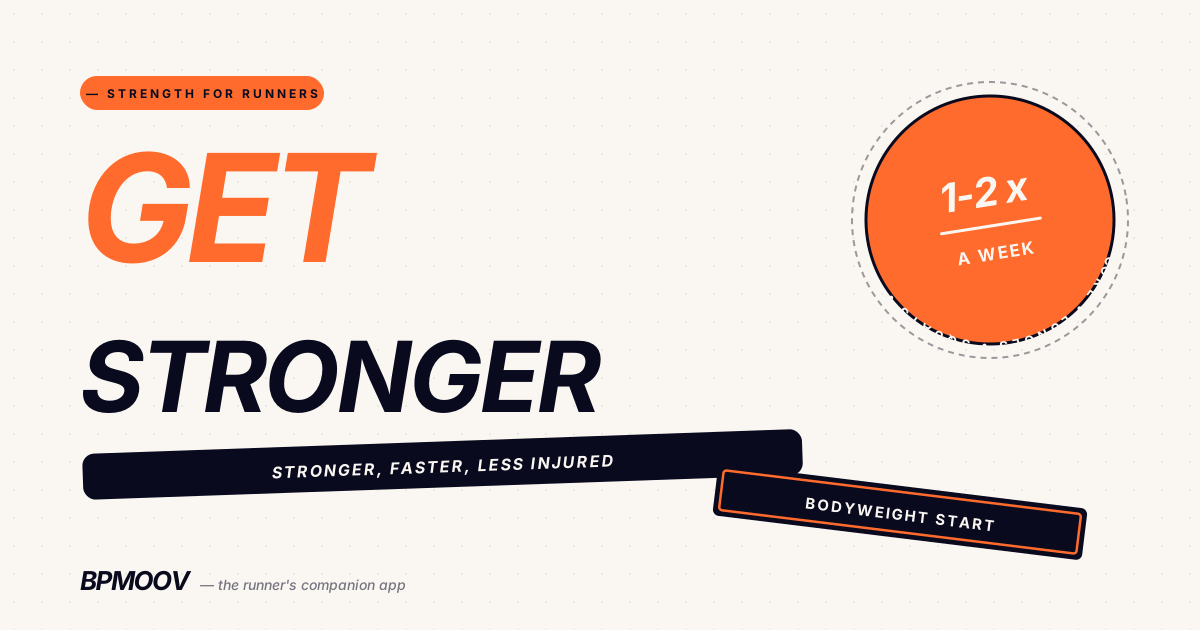
No need to overdo it: 1 to 2 sessions a week of 20 to 30 minutes is plenty to reap most of the benefits. It's sustainable long-term, and that's what counts.
For placement in the week, two options. Either do your strength work on the same day as a hard run (for example after an interval session), so you keep your easy days truly easy. Or schedule it on a non-running day, but avoid stacking it right before a big run: you'd be running on tired legs.
Also avoid a hard strength session the day before a race. As with running, progress comes from consistency, not excess.
How to start without getting discouraged
The best routine is the one you stick to. Start small: two exercises, twice a week, and add over the weeks. Fifteen regular minutes beats a one-hour session abandoned after two weeks.
Film yourself or work in front of a mirror to check your technique at first. And be patient: strength and stability gains take a few weeks to translate into feel, but they settle in for good.
Stronger, more stable, ready to aim for your next start line. BPMoov gathers road and trail race registrations across France and Europe — free, iOS and Android. → Download BPMoov.
FAQ
Will strength training make me heavier and slower?
No, not with targeted bodyweight or light-load work. This type of training builds strength and stability without significant mass gain. The benefits — better running economy, a more efficient stride, fewer injuries — far outweigh any downside. You gain performance, not extra pounds.
How many strength sessions per week for a runner?
One to two sessions a week of 20 to 30 minutes is enough for real, lasting benefits. Beyond that, the effort-to-benefit ratio drops and fatigue can eat into your runs. Consistency matters most: two short sessions kept up all year beat long sessions you abandon.
Do I need equipment for strength work?
No, you can start everything with bodyweight: planks, squats, lunges, glute bridges, calf raises, balance drills. That's already very effective for most runners. You can add resistance bands or light dumbbells later, once your technique is solid and the benefits have set in.
When should I fit strength work into my week?
Ideally on the same day as a hard run, to preserve your easy days, or on a non-running day. Avoid scheduling it right before a big run or the day before a race, so you don't run on tired legs. The goal is to complement your training, not sabotage it.
Does strength training really prevent injuries?
It's one of the most effective prevention tools, though it doesn't guarantee invincibility. By strengthening the core, glutes, posterior chain, and ankles, you let your muscles absorb running's repeated impacts, which spares tendons and joints. It also corrects the imbalances behind many knee and hip pains.
I'm a new runner — should I already be doing strength work?
Yes, and it's actually a great time to start. A few simple bodyweight exercises, once or twice a week, lay solid foundations and reduce injury risk from the outset. Start light, focus on technique, and progress alongside your running without trying to do too much at once.