Post-Race Recovery: The Complete Guide (10K to Marathon)
TL;DR — Progress isn't built during the race; it's built in the recovery that follows. The essentials come down to four things: rehydrate and eat carbs + protein within the hour, sleep (the number-one lever), move gently rather than freezing up, and follow one simple rule for coming back — roughly one easy run-day per mile raced (about 6 days after a 10K, 13 after a half, 26 after a marathon). Here's the full playbook.
You crossed the line: medal on, legs like jelly, head full of it. Now what? Plenty of runners sabotage the following weeks by coming back too soon — or, the opposite, stop dead and lose the thread. Recovery isn't a break from training: it's part of it, with its own rules. Here they are, from the first 60 minutes to your return to hard sessions.
Recovery is training (really)
During a race you don't get stronger: you fatigue, you empty your stores, you create micro-damage in the muscles. It's afterward, at rest, that the body rebuilds — a little stronger than before. That's supercompensation. Skip that phase and you just stack fatigue without letting adaptation happen: fitness stalls and injury risk climbs. In other words, the "easy" days after a race matter as much as the race itself.
The first 60 minutes: rehydrate and refuel
The window right after the finish is the most valuable. The goal: restart glycogen replenishment and kick off muscle repair.
For carbs, aim for about 0.6–1.0 g per kilo of body weight within 30 minutes, then repeat every two hours over the next 4–6 hours. For a 70 kg runner that's ~45–70 g of carbs per serving — a banana plus a bar, or a proper meal. Add 20–25 g of protein to repair the fibers; a roughly 3:1 to 4:1 ratio (carbs:protein) is a good benchmark. A recovery drink, chicken and rice, Greek yogurt with fruit — the form doesn't matter; timing and balance do.
And drink. Rehydrate with water or an electrolyte drink as soon as you can, without forcing huge volumes: pale-yellow urine is your best gauge.
The first 24–48 hours: move, sleep, welcome the soreness
Right after finishing, don't collapse on the couch for three hours. Walk 10–15 minutes — it helps flush metabolic byproducts and limits next-day soreness. The following day, 20–30 minutes of walking, easy cycling, or swimming beats total stillness.
But the real superpower is sleep. Most repair happens during deep sleep. A 90-minute nap in the hours after a big race can help, and above all, protect your nights in the days that follow: it's the most powerful recovery lever there is — and the cheapest.
As for soreness (DOMS, delayed-onset muscle soreness), it usually peaks 24–72 hours after the effort. That's normal, it isn't a sign of injury, and it doesn't mean you raced "wrong." Light movement eases it better than complete rest.
How many rest days by distance
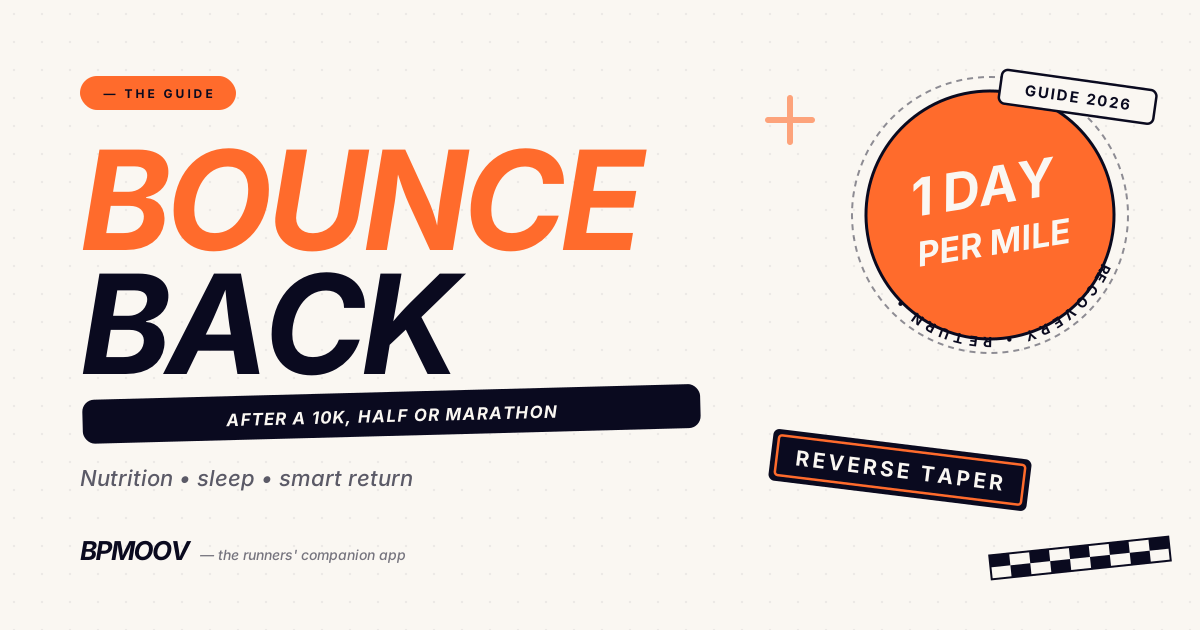
There's a simple, surprisingly robust rule of thumb: one easy run-day per mile (1.6 km) raced before returning to normal training. In practice:
After a 10K (~6 miles): a few very easy days usually do it. Figure roughly 5–6 days before a quality session again, depending on how you feel.
After a half marathon (~13 miles): plan 2–7 days off or very easy jogging, with full recovery spanning 10–14 days. The first 3–5 days should stay true rest or very light movement, not intensity.
After a marathon (~26 miles): the most demanding. At least a week without running (3–6 days of complete rest for a beginner), no hard sessions for two weeks, then a gradual rebuild over 3–4 weeks. This is the reverse taper: the opposite of tapering, where you rebuild slowly instead of unloading.
These numbers are guides, not dogma: a seasoned marathoner feeling good will come back faster than a first-time finisher. Listen to your sensations before your calendar. And if you're already eyeing the next one, our guides to your first marathon, first half, and first 10K lay out full plans.
Use this pause to line up your next goal and keep it handy. BPMoov lets you build your personal calendar of road and trail races. → Download the app.
Cold, compression, massage: what actually works
The recovery market is full of gadgets. Let's sort them out.
Ice baths / cryotherapy: the evidence is mixed. Many elites swear by the icy plunge, but science has never clearly shown it speeds recovery. Verdict: optional. If it feels good on acute soreness, go for it; it isn't essential, and there's no need to force yourself.
Pneumatic compression boots: they can reduce soreness, swelling, and stiffness, and offer real comfort — a nice extra, not a must.
Massage, foam rolling, gentle stretching: mostly comfort and relaxation. Pleasant, no miracles.
Active recovery (walking, cycling, swimming, very slow jogging): alongside sleep and food, it's the most reliable lever. Keep blood flowing without adding stress — that's the point.
Warning signs before you ramp back up
Your body talks; learn to listen. Push back hard sessions if you notice lingering fatigue, poor sleep, an unusually high resting heart rate, unusual irritability, or soreness that persists beyond a week. A small joint or tendon niggle turning into real pain is a stop sign, not a detail.
A few signs mean see a professional without delay: very dark or very scant urine after a marathon, intense or abnormal muscle pain, or any chest pain. When in doubt, get medical advice — no performance is worth your health.
When you feel ready to target a new bib, pick it early: save a race in BPMoov to get the registration-opening alert and lock in your spot. → Browse races.
In short
Recovering well isn't wasted time: it's how you make sure your next start line is better than the last. Eat and drink within the hour, sleep like a log, move gently, and come back according to your distance and your sensations. The rest is just bonus.
And the best motivation to recover smartly is to already have the next one in mind. BPMoov brings together 2,000+ road and trail races across France and Europe — free, on iOS and Android. → Download the app.
FAQ
How long does it take to recover from a marathon?
Plan at least a week without running, two weeks without hard sessions, then a gradual rebuild over 3–4 weeks — about 26 days total, following the rule of one easy run-day per mile raced. Beginners often take 3–6 days of complete rest right after. An experienced marathoner feeling good can come back a little faster.
Can you run the day after a race?
It's better to walk or do 20–30 minutes of very gentle cross-training (cycling, swimming) the next day rather than a real run, especially after a half or marathon. After a 10K, a very slow jog can be fine if you feel good, but active rest is the better choice in the first few days.
What should you eat right after a race?
Within 30–60 minutes, aim for about 0.6–1.0 g of carbs per kilo of body weight and 20–25 g of protein (a ~3:1 to 4:1 ratio), with water or an electrolyte drink. A full meal or a recovery drink work equally well: timing and balance are what matter.
Is post-race soreness (DOMS) a bad sign?
No. Delayed-onset muscle soreness peaks 24–72 hours after the effort and is a normal response, not a sign of injury. Light movement eases it better than stillness. That said, sharp, localized pain that worsens isn't soreness — it's a warning sign.
Do ice baths speed up recovery?
The evidence is mixed: many athletes enjoy them, but science hasn't clearly shown they speed recovery. They're a comfort option, not a necessity. Sleep, nutrition, and active recovery matter far more.
How do I know if I'm recovering well?
Good daily energy, quality sleep, resting heart rate back to normal, the urge to run, and no pain are your green lights. Lingering fatigue, disrupted sleep, soreness beyond a week, or a niggle turning into pain are red lights that justify waiting a bit longer.